Research
Research Overview
My research agenda revolves around the question of the origins of social order and stability in fragile states. There is ongoing scholarly debate about the origins of social order and stability in fragile states torn by civil strife and/or other sociopolitical upheavals. In many developing countries, particularly fragile states, collective goods such as security, justice administration, public services, etc., are typically not provided by states but rather depend on the ability of groups to work together. Prior theoretical work points to long-run, largely indigenous evolutionary processes or exogenous major shocks that reshape social relations at key historical junctures as key sources of cooperation and social order. In recent decades, however, several empirical studies have challenged this premise and investigated whether and how social order and stability, at least at the local level, can emerge from external interventions, even if brief. My work lies at the intersection of this literature. It theorizes about (and provides empirical evidence for) the conditions under which external interventions can help establish social order from below as well as the critical role of local contexts in shaping outcomes.
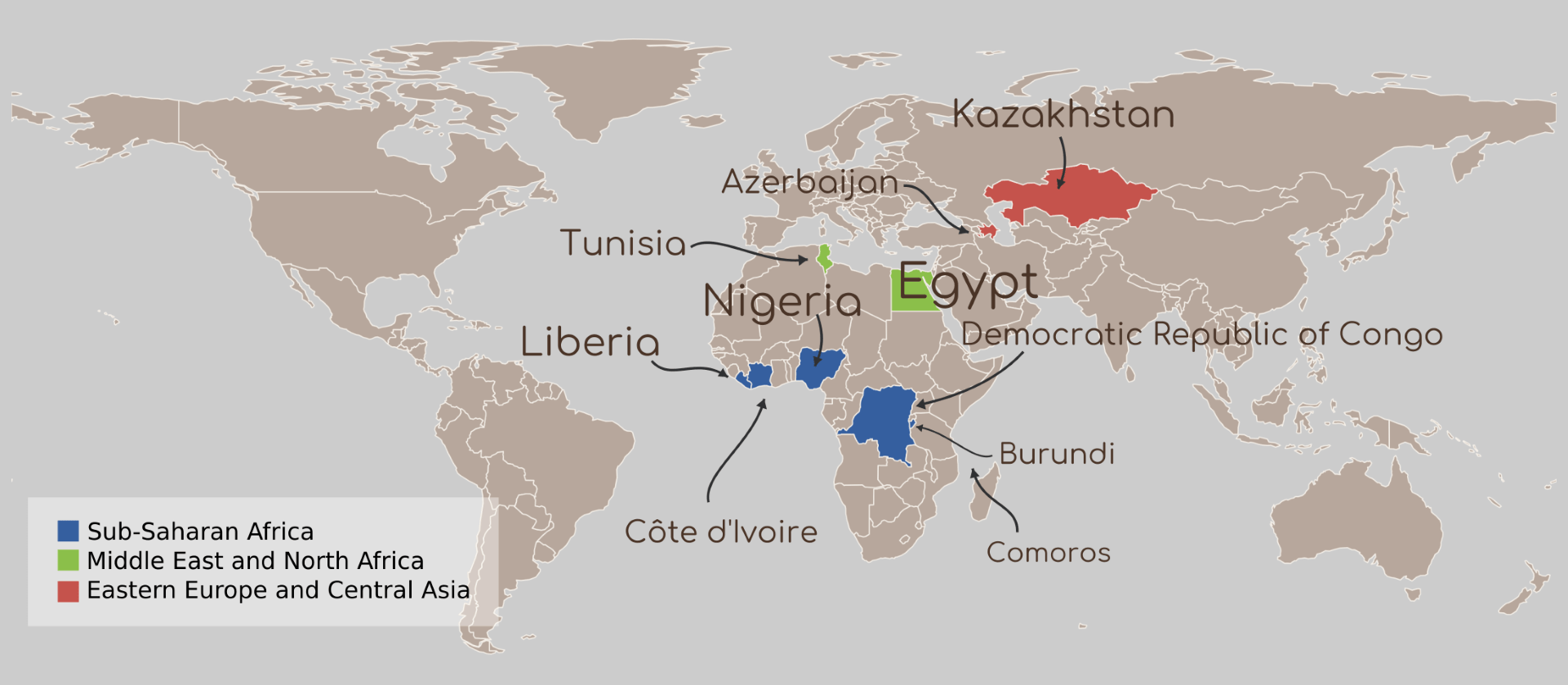
Where I do research & support operational work
1. Political Economy

This research lies at the intersection between Security Peace and Conflict and Political Economy. It investigates the link between employment opportunities and social stability in fragile states, with an emphasis on various channels through which economic assistance programs can relax constraints to social order. While conventional wisdom holds that poverty and unemployment are empirically linked to social instability, theoretical mechanisms remain underspecified, and credible empirical evidence is limited. This has resulted in a frozen debate. My research seeks to advance this agenda through a three-pronged strategy. First, building on social contract theory and the classical framework of societal responses to interventions, I develop a theoretical framework specifying causal mechanisms linking employment opportunities and social stability outcomes in a nuanced way, and outlining conditions under which different types of employment interventions (e.g., demand-side vs. supply-side) may influence a variety of social stability outcomes. Second, this research draws on rich, original data from a dozen randomized controlled trials of a variety of employment programs that provide work opportunities to tens of thousands of households in diverse settings to identify causal effects. In particular, it leverages a six-country randomized controlled trials initiative of public works programs (PWPs) with harmonized designs and outcome measurements in four countries in Africa and the Middle East. Third, this research strand also encompasses an empirical investigation of the additional sociopolitical externalities of employment opportunities, including international and internal migration, socio-political trust, and religious enforcement, among others. Taken together, these works suggest that under certain conditions, employment opportunities can trigger diverse mechanisms and influence a wide variety of outcomes, both directly and indirectly, thereby providing a more comprehensive picture of how employment opportunities shape social order from below.
2. Security, Peace & Conflict
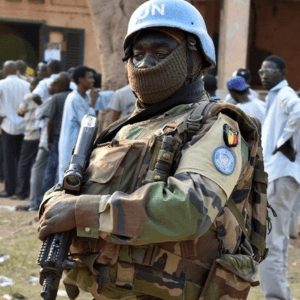
This research centers around the micro-foundations of peacekeeping and peacebuilding interventions in conflict and post-conflict processes, with a focus on the role of third-party actors in alleviating information asymmetries between elites and the masses and anchoring coordination. This research was motivated by the seeming disconnect between nationally driven peace efforts and local realities, and by insights that, while macro-level processes (whether autonomous or externally driven) may be necessary for order restoration, they are not sufficient to restore or create stable, self-sustaining order. My research aimed to help bridge this gap through theoretical and empirical efforts. It examines how constraints such as information asymmetries between elites and masses, voter coordination, and social dislocations preclude the formation of stable sociopolitical equilibria, and the role of third-party actors in addressing such constraints. It also evaluates how security and non-security strategies in peacebuilding interventions interact with local institutions and processes to shape sociopolitical orders from below. Another dimension of my research in this strand focuses on the link between employment and social stability in fragile states, which is covered under the “Political Economy” area.
3. Governance & Institutional Reforms

The governance and institutional reforms in the context of (decentralized) public goods provision under weak state capacity research strand examines the origins of social norms and informal institutions that facilitate cooperation and collective action particularly in fragile states. This research is motivated by the recognition that social order and public goods can be provided and collective action organized effectively, even without strong central authority. At its core, this research seeks to investigate the effectiveness of foreign-funded efforts to build (new) local institutions relative to an alternative approach that focuses on strengthening existing local institutions’ capacity to provide public goods and to resolve local disputes. Part of this research also seeks to investigate whether small-scale, externally funded and driven interventions can alter patterns of social interactions and capacity for collective action. Another part of this research seeks to investigate the conditions under which decentralized and informal institutions can enhance accountability in public goods provision, facilitate collective action and promote social cohesion. Finally, another aspect of this research focuses on civil service reforms in the context of fragile states and implications for state capacity and service delivery. It specifically focuses on how the selection of bureaucrats can be improved and intra-civil service corruption be reduced under weak state capacity.
4. Women’s Agency & Empowerment

The women’s economic and political empowerment focuses on spousal information in improving women’s labor market outcomes, gender gaps in political preferences, the barriers to women’s political participation, and the prevention of violence against women. Despite a steady increase in the convergence of socioeconomic roles between men and women in the past decades, significant gender disparities persist, and gender equality remains elusive, particularly in developing countries. These gender gaps have been remarkably persistent despite sustained policy efforts to reduce them, and the empirical literature to adjudicate among many competing theoretical claims remains thin. My nascent but vibrant research agenda seeks to better understand constraints to women’s empowerment and to investigate, through field experiments, how different policies and programmatic interventions can help relax them. This research focuses on two sets of inter-related issues: (i) the link between economic opportunities, spousal information inside the household and in the labor market as well as their consequences for intra-household bargaining, economic empowerment and intimate partner violence; and (ii) the link between political information from a variety of sources and women’s agency, preference formation, and political empowerment and participation.
5. Other Work (Public Health)
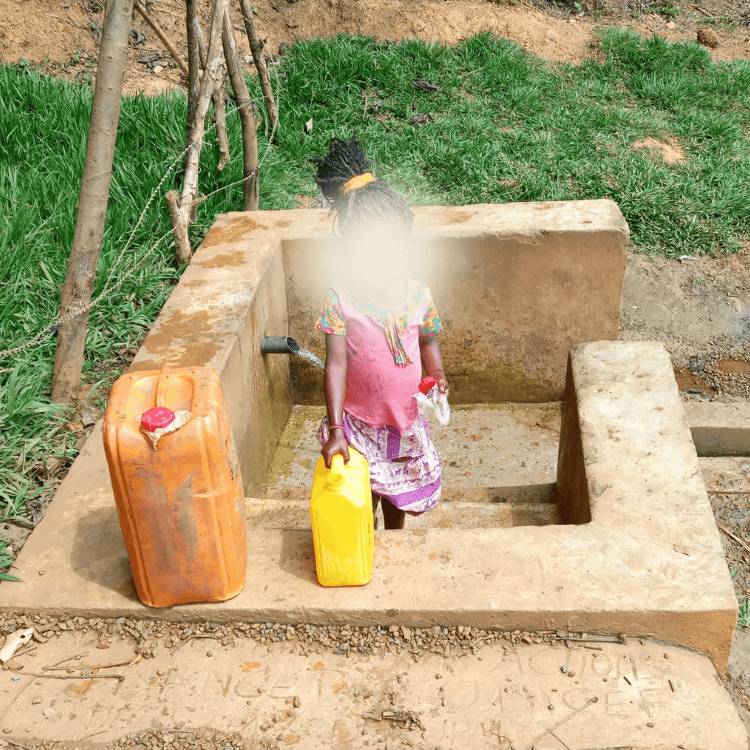
Aside from the four primary research areas, my work also focuses on investigating the effects of a variety of development interventions, including employment programs or WASH on health (public, child and mental) outcomes. I am currently the PI on a 4-year, NIH-funded project entitled, “Effects of parents’ participation in public work programs on children’s health and education in select low- and middle-income countries,” which leverages six of previous public works RCTs in the DRC, Egypt and Tunisia to investigate long-run impacts of public works investments on child outcomes broadly defined to include child labor, health and education, among others. This project involves Co-PIs from Fordham University, the University of Pennsylvania, University of Carleton, American University in Cairo, the Mediterranean School of Business in Tunisia and the Protestant University in Congo. I also have ongoing research projects that investigate: (i) the potential for online labor markets and jobs matching interventions to provide new opportunities to the poor and vulnerable individuals; (ii) the political economy of state legitimacy and tax morale in fragile settings; (iii) the micro-foundations of civilian protection and preferences in conflict and post-conflict processes; and (iv) potential complementarities and substitution between the state and local or traditional institutions.